WWE 2K15 (Next-Gen) Review: A Disappointing Slouch in the Ring

The WWE’s charismatic, star-studded roster has finally entered next gen. Several years and installments of official WWE branded wrestling games have led up to this highly anticipated moment. Longtime game developer Yuke’s has partnered with the basketball sim geniuses at Visual Concepts to properly bring WWE’s 2015 sequel to the Xbox One and PS4. Unfortunately, WWE 2K15’s overall content package is slimmed down tremendously in several areas, which makes it feel like an incomplete and disappointing entry in the series.
WWE 2K15

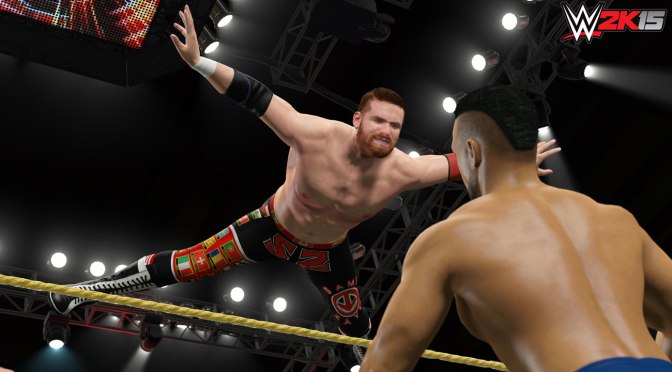
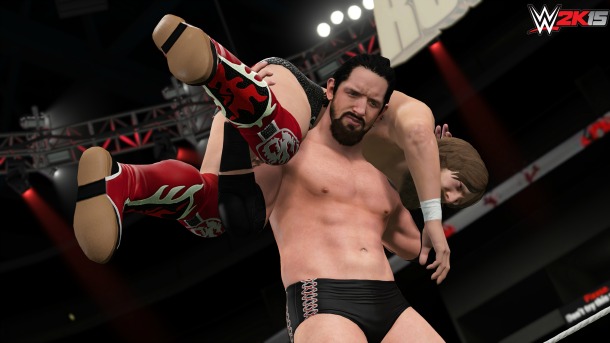
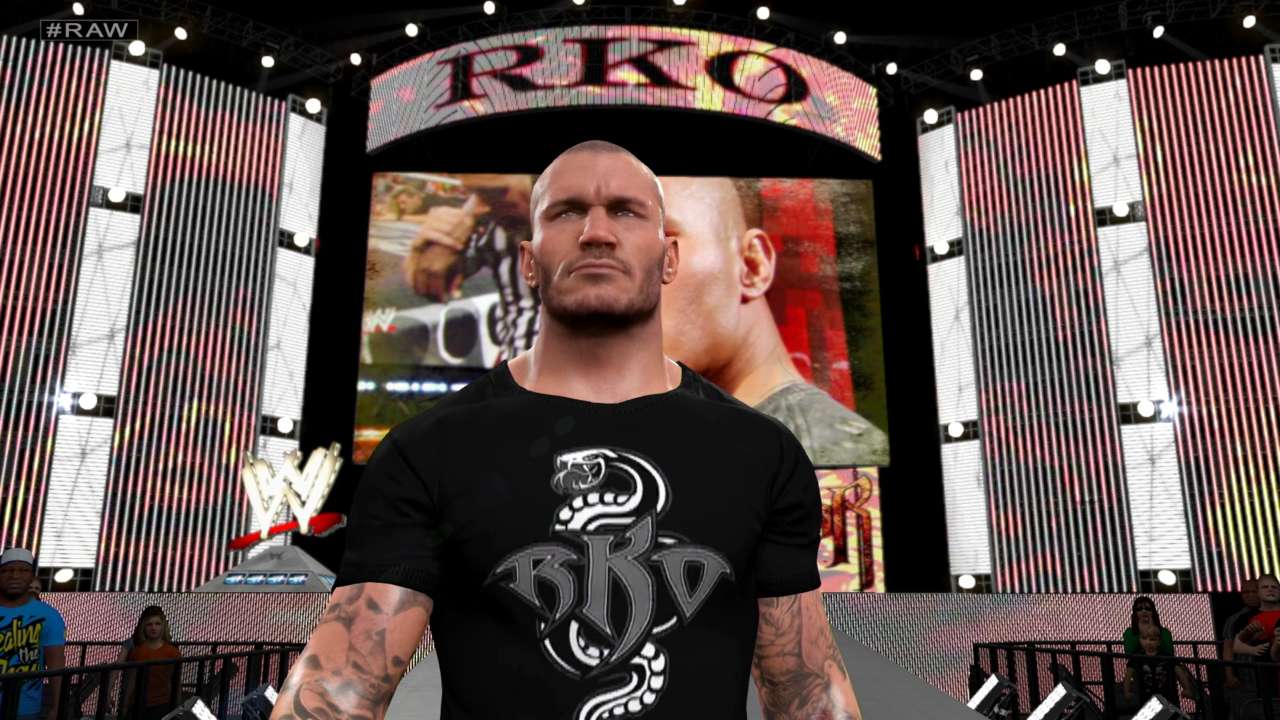
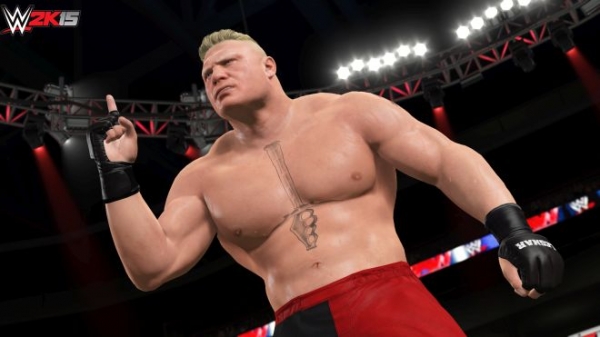
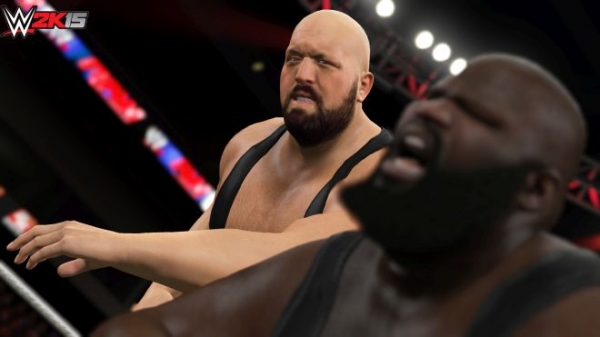
From first glance, it’s easy to see just how incredible the game looks. The Xbox One and PS4’s versions of this “wrassler” looks impressive. Some of the models sported in-game look completely identical to their real-world counterparts, and the arenas look just as awesome. It’s pretty easy to spot which ones were given the next-gen visual overhaul and see which Superstars had their previous game models simply ported over. Some of the roster members (John Cena, Randy Orton) look incredible, while a few wrestlers (CM Punk, some of the Divas) don’t look as clean and realistic as everyone else.  WWE 2K’s legacy issues (body parts getting entangled with each other during awkward move exchanges) are still present, sadly.

The audio department excels and falters in several areas. The in-game soundtrack is a huge step down from WWE 2K14. Losing the option to jam out to wrestling themes and original tunes is a major letdown. The curated tracks provided by John Cena aren’t very plentiful and to be quite honest, most of them aren’t very good. You’ll likely grow tired with them after just a few play sessions. The commentary has to be commended for its notable improvements. Michael Cole and Jerry “The King” Lawler went out of their way to record better lines and freshen up their vocal exchanges. Their commentary really shines during the classic feud moments seen in Showcase Mode.
WWE 2K15

WWE 2K15’s gameplay is familiar, but a few new mechanics both aid and hurt the gameplay at times. The grapple system is a nice addition that replicates the flow of action seen at the start of real wrestling bouts. It feels good to get into a heated grapple exchange with a fellow player and become the victor. These moments lead to players getting an advantage over the opponent and put their technical wrestlers skill on full display. The stamina system is cool in theory. As matches go longer, Superstars begin to move slower and reflect their damaged conditions on-screen. These mid-to-end match mechanics become quite the bore, though. Wrestlers begin moving at a snail’s pace, which kills the action mighty fast. The novelty of hitting a finisher and pulling off a fatigue filled pin wears off just as fast.

Two of the major modes included in this new iteration includes MyCareer Mode and Showcase Mode. MyCareer takes your created wrestler on a journey that starts from WWE’s training camp and finishes on the biggest stage of them all as far as wrestling is concerned. Things start out well as you enter the NXT training camp and fight your way through fellow up and comers. This mode loses its luster quickly due to a number of factors – repetitive matches, text-heavy moments with rivals, a painfully slow build to improving your Superstar and uninteresting story lines.  The potential for MyCareer being great is there, but the flawed execution will surely disappoint you.
WWE 2K15

Showcase Mode also showcased the potential to be a huge, positive addition to the series. Two major rivalries (John Cena vs. CM Punk and Shawn Michael vs. Triple H) are included. Similar to last year’s 30 Years of WrestleMania mode, you’ll take control of certain wrestlers and complete match specific goals during key moments of a storied feud. The attention to detail this mode sports must be applauded. The extra cutscenes, real life footage and cool unlockable items make this mode more of a joy. However, it’s hard to completely love this mode. Only two rivalries are playable and the incredible suite of legends seen in WWE 2K14 are missing this year.  Having the option to play legendary rivalries such as Steve Austin vs. The Rock or Bret Hart vs. Shawn Michaels is an issue that’s tough to overlook for hardcore wrestling fans.

WWE 2K15’s customization options are decent, but they also come with some glaring omissions. Story designer, customized championship and even the option to create your own Divas have been taken out. The option to transport real-world images into the game via your console’s camera is a very cool option. Pulling modern logos from your favorite wrestlers new gear and porting them onto your created Superstars keeps your custom roster up to date. It’s still saddening to see that you only have the option to create 25 wrestlers instead of 100 this time, though.
WWE 2K15

WWE 2K15 will elicit a long sigh from longtime followers of the series. Most of the incredible content sported in WWE 2K14 are cut out completely from this new-gen sequel, some Superstars don’t look as good as their counterparts, the roster is depleted and the two most talked about modes are plagued by annoying problems. WWE 2K15 looks next-gen, but it completely feels like a last-gen step back for the entire franchise…


Images: Yuke’s, Visual Concepts, 2K Games
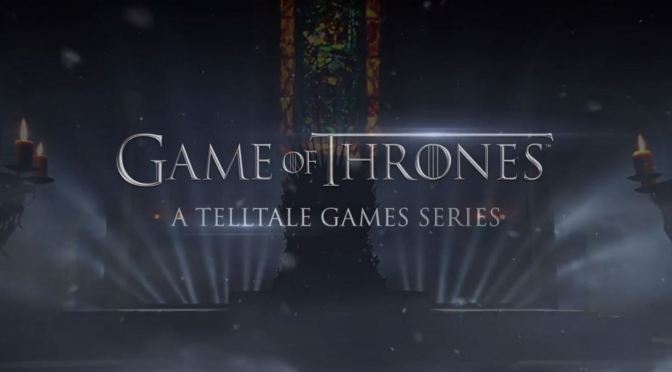
Game of Thrones: A Telltale Game Series – First Trailer Introduces House Forrester

Telltale released the first footage of their upcoming game based on the license of HBO’s Game of Thrones series, and while short, there is enough information to glean from its 51 second span to look ahead at what’s to come.

Continue reading Game of Thrones: A Telltale Game Series – First Trailer Introduces House Forrester

Mace Windu The Unlikely Subject Of A New Star Wars Spinoff?

The Star Wars universe is getting a major directorial shot in the arm.

J.J. Abrams is hard at work on Star Wars Episode Seven: The Force Awakens, with fellow Hollywood directors Rian Johnson, Josh Trank and Gareth Edwards all on related projects. Lucasfilm has tapped these talented individuals to craft future installments of the SW Universe over the next decade. Some of the rumored names who may be a part of those stand alone projects include Han Solo, Yoda and even the infamous bounty hunter Boba Fett.

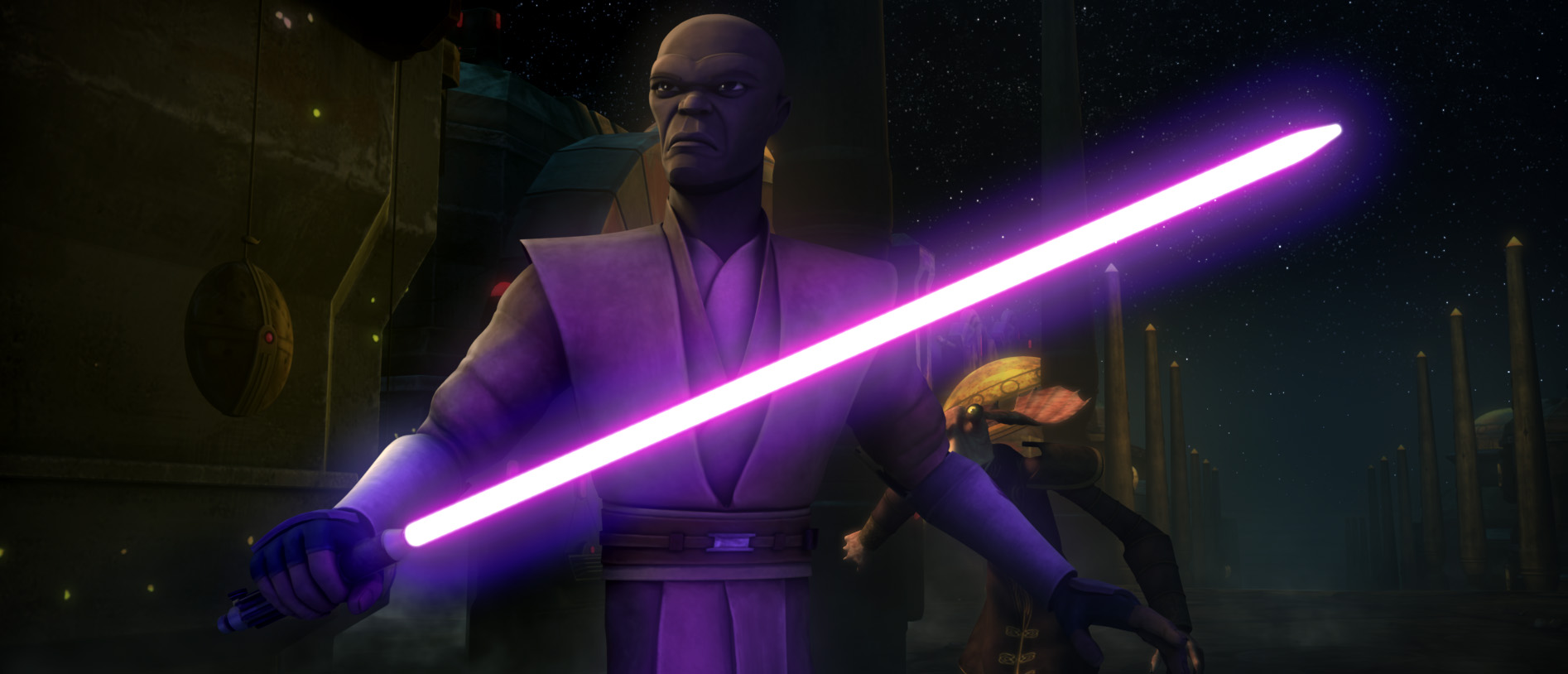
But if the information we caught on display in a recent director-helmed Reddit AMA is to be believed, another Jedi may join that list of characters planned for their own big screen stories. The Jedi we’re referring to is none other than Master Mace Windu!

Mace Windu Clone Wars

Director A.J. Edwards hopped on Reddit to promote his upcoming film The Better Angels, which focuses on a young Abraham Lincoln. A fan asked about the unlikely scenario of Edwards taking on a Star Wars film.  Here’s what transpired during that Q&A session:

The Better Angels is a great film and I can’t wait for the world to see it. Is there any truth to the rumor you will be directing a spin-off Star Wars film?

Talking about it, not able to say a lot yet. It will focus on Mace Windu.

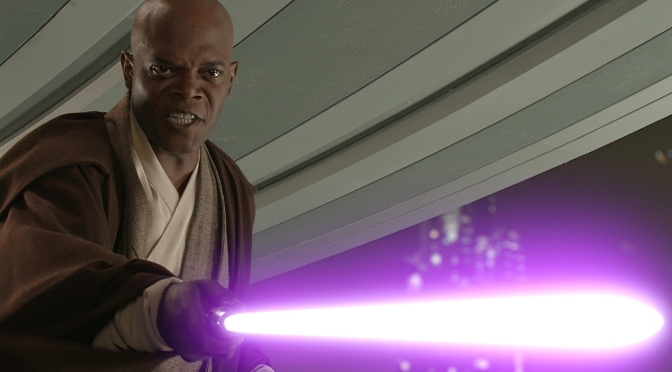
For those of you who need a refresher on who Mace Windu is, his life was taken during an intense stand-off with Chancellor Palpatine and a newly turned Dark Side Anakin Skywalker. That climactic scene took place in Star Wars Episode III: Revenge of the Sith (it hurt us to see that cool as hell purple lightsaber wielder get electrocuted so bad. It’s likely that this film, if made, would have to take place even earlier than The Phantom Menace, and that seems like something Disney isn’t eager today revisit – prequels.

http://www.youtube.com/watch?v=cXjT6Dg4E68

We hope the rumors surrounding this Star Wars spinoff movie comes true as seeing a young Mace could be interesting, though Jackson would likely be too old to reprise the role. In earnest though, given his resume, Edwards seems an unlikely choice to do a SW film, and this was no doubt said in jest. We’re still waiting for confirmation on the first couple standalone flicks in the series, so we’re pretty sure this news wouldn’t have been dropped in this manner. Anyhow, keep hoping Jedi fans, we’ve been wrong before.


 Images: Lucasfilm, NetFlix

Why A 15 Minute Story In Far Cry 4 Might Not Suck

Just before its release earlier this week, a rumor that Far Cry 4‘s main campaign could be completed in just 15 minutes generated a murmur of contempt from a small group of fans who were irked with the notion that Ubisoft might be short-changing their customers. Considering a typical game in this genre features on average a 10 hour story, surely this is hurting the game and it’s worse for the customer…Right? Well, maybe not.

A 15 minute story does not mean the game itself runs out of content in 15 minutes – the Far Cry games are open-world titles that not only allow players to explore the environment outside the mandatory story missions, they actually incentivize it. There are dozens of smaller missions, hunting expeditions and collectibles to find all over their maps, and quite frankly, they’re far more entertaining than the majority of their narratives. The idea that gamers would be up in arms over the length of the main story arc is interesting because, in my experience, the stories in these types of games often end up feeling like expositional set-dressing, or unavoidable obstacles that get in the way of my entertainment, and to be honest, a 15 minute story in a 20 hour game sounds like a fantastic idea to me. Games are interactive, after all, and few of them have manipulative physics and emergent gameplay moments that are as gratifying to experiment with as the Far Cry series.

Take Middle Earth: Shadow of Mordor, for example. The game’s story is bare and utterly conventional, but players create their own tiny stories by interacting with enemies using the game’s Nemesis system, which allows enemy orcs to remember past run-ins with the player. The effects can be startling. You can kill an enemy only to see him later, sporting a nasty scar or burn from your last encounter. If you’re lucky, he’ll be scared of you this time, and run the second he sees you coming. Or you can fail to kill a captain, and he’ll mock your corpse and earn a nifty promotion for putting you down. When you meet up later for a rematch he’ll remember that you’re supposed to be dead, and he might relish the opportunity to murder you again. Getting revenge on an Uruk that killed you days before is far more rewarding than actually avenging your family at the end of Mordor‘s story, and is actually relevant to your own experience, but the game’s dialogue and cinematics will constantly urge to you to remember how much more you should care about the wife and son that Sauron took from you, despite having only met and lost them in the span of seconds in the game’s opening scene. The emotional gap between what you experience and what the game tells you you’ve experienced is in major conflict, but worse, the game undermines the stories you do create by forcing their own into the forefront.

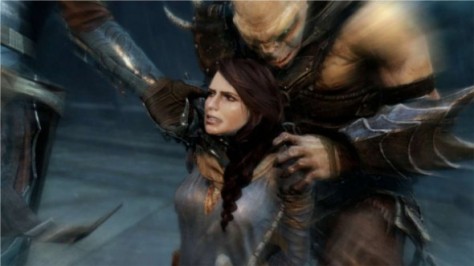
This is your wife in Shadow of Mordor, who you love very much despite not remembering her name.
This is my wife in Shadow of Mordor, who I’m told I love very much, despite not remembering her name.

The largest offender of this is Skyrim, a game that offers an obscene amount of freedom to the player with regard to the stories they craft for themselves, but never allows you to create your own identities with that freedom. Interspersed throughout the game’s staggeringly large map, you will find opportunities to join and rise the ranks of a number of guilds and factions that each feature their own storyline, culture and relevance to the larger world of Tamriel. You can lead an organization of werewolves, join a legendary band of assassins and run a prestigious college, to name just a few. The problem is that all of these stories are forced to play second fiddle to the game’s “main” story, which focuses on your player being the legendary savior of the province of Skyrim, and any one of them felt more rewarding to me than the campaign because I discovered those factions and chose to be a part of them. Being forced to play the role of the Dovahkiin was the developer constantly reminding me that all those interesting, discoverable moments I decided were important to my character were sideline distractions to the main event. It broke the illusion from both ends: Not only was I pulled away from building the story I wanted for the character I created, the final Skyrim ‘canon’ of my game featured a Viking hero of prophesy, who took up smithing for a week, and put saving the world on hold to see if he could own every style of clothing in the province, just for fun.

Other RPGs succeed where Skyrim fails. Fallout 3 allows you to almost completely forget why you’re out in the wasteland to begin with at times, and it’s more of an asset than a flaw. The premise of Fallout 3 is that you leave your home – a claustrophobic fallout shelter – to find your father, who suddenly disappears from the Vault one day. It’s a simple conceit that provides the player with a clearly defined ‘endgame’ goal. You can find out where your father has gone almost immediately, and the game will put a big fat map marker right on your Pip Boy for you too. The thing is that there’s a whole lot of unexplored Washington D.C. between you and that location, and you’ll spend most of your time just surviving and learning about the world before you can reach the next story thread. What happens is you quickly learn through trial and error that the best way to gain access to your father is by scavenging for supplies (and xp) to make you tough enough to travel all the way to his location. Survival begets narrative in Fallout, and while you’re looking for better weapons and armor to keep yourself alive, you’ll catch yourself interacting with the locals and investigating little mysteries at each point of interest, uncovering the new culture of the post-nuclear United States. It makes sense within the context of the game too, because your character has spent his entire life up until this point living within the oppressive, narrow walls of Vault 101; you and your avatar share the same sense of awe and curiosity about the world around you, but in addition to that, your father’s disappearance is entirely connected to the state of the world you find yourself in. All of your experiences in the wasteland up to that point feel complimentary to the arc of the guiding storyline, rather than interfering or opposing it. It adds context and depth to both the smaller events you uncover while roaming the open world and they in turn reinforce the importance of the main story’s consequences. The story beautifully lends itself to player exploration, and if you were to isolate the specific ‘main narrative’ missions you might be surprised at how short Fallout 3′s skeletal narrative actually is.

It also helps when your dad is Liam Neeson

The point is, a main quest is only as important as the world around it deems it has to be. In Far Cry 3, the predecessor to the game that spawned this whole article, there isn’t really any secondary story option that moves away from the central plot line, but there are dozens of hours of small diversions and emergent gameplay opportunities. Players can avoid the next narrative beat for days collecting hidden items and taking over outposts without undermining the integrity of the main plot, or straying from the game’s underlying theme: No matter how far you stray from the critical path, all your actions in Far Cry 3 will always fit the context of Jason Brody finding himself on foreign land, struggling with the conflict between his own bloodlust and the need to escape the Rook Islands. That is what makes the game such a unified experience, and it’s why it doesn’t face some of the same conflicts that arise when a game forces its story upon a player in an open world.

Considering one of the most common – and justified – critiques about Far Cry 4 is how similar it feels to Far Cry 3, even if the game’s campaign was able to be completed in fifteen minutes, here’s enough reason to hold back your internet rage. By the way, that fifteen minute-long campaign rumor is only half true, and unless you follow a particular method, you’ll have a more traditional RPG storyline at your disposal. It’s almost too bad though, because the 15 minute story is absolutely brilliant (beware, major spoilers).


Images: Ubisoft, Warner Bros., Bethesda

Conveyors of Common Sense…

  • Privacy